
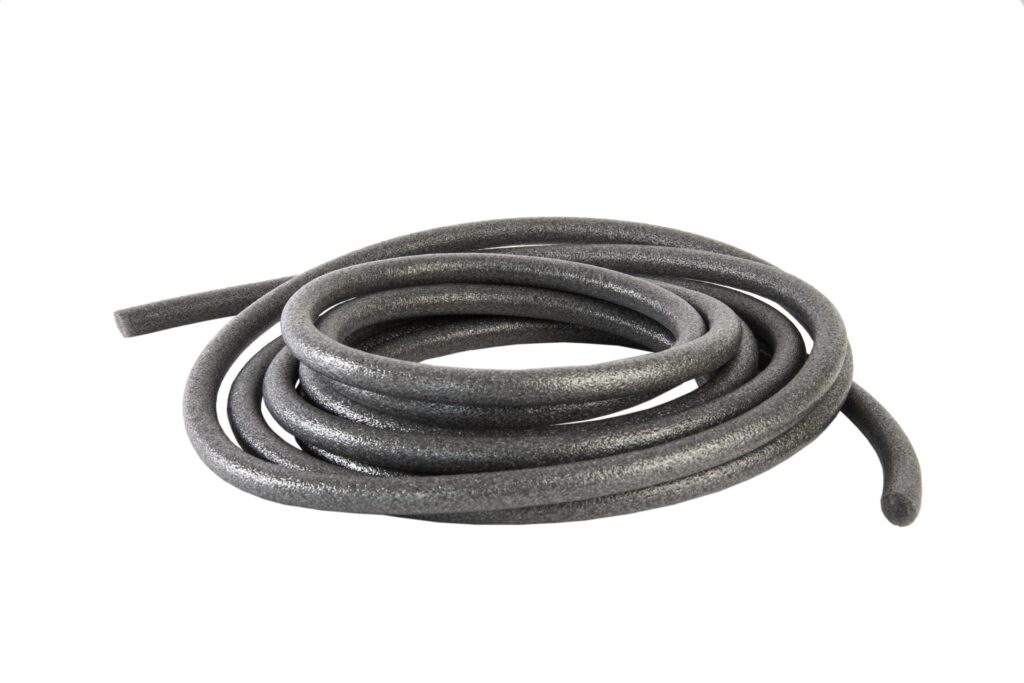
One of the most important components of a sealant joint is the backer rod. It provides key functions that help the sealant joint perform properly. First, the rod acts as a bond breaker, helping prevent what is known as three-sided adhesion. This occurs when the sealant adheres to both sides of the joint as well as the bottom. By using a backer rod, the sealant is directed to bond only to the sides of the joint, allowing it to move as intended without unnecessary stress on the bond.
When there are joints between tiles, concrete blocks, or masonry units, backer rods can help fill the open space before sealant is applied.
The rods are placed into grooves, cracks, or joints before the space is filled with mortar, adhesive sealants, or chinking. Backer rods help support the sealant application while keeping the sealant depth consistent. This allows the sealant to accommodate movement without placing excess stress on the bond.
Backer rods generally come in three major types: closed-cell, open-cell, and hybrid. Each type has its own benefits and limitations, depending on the application. Open-cell backer rod compresses easily and can help facilitate sealant curing. However, it is not typically recommended for flat or horizontal joints where water may allow moisture to reach the underside of the sealant.
Closed-cell backer rod is often a better option for flat joints because its structure helps resist moisture absorption. However, care is needed during installation because it can be more difficult to compress into the joint. If punctured where the sealant is applied, it may create a void that can lead to outgassing. This is where hybrid backer rod becomes useful. It has an internal open-cell structure that makes it easier to install, along with a closed-cell exterior that helps make it suitable for horizontal and flat joints where moisture resistance is important.