
Polyethylene foam is used in countless products, from construction materials and protective packaging to recreational equipment and industrial components. Its lightweight, flexible nature makes it a practical choice for many applications, but one of its most important characteristics is something that cannot easily be seen: its internal cellular structure.
Closed-cell polyethylene foam consists of thousands of tiny, enclosed gas-filled cells throughout the material. This internal structure helps the foam resist moisture absorption, absorb impacts, recover from compression, and provide thermal resistance. These characteristics make it valuable for applications ranging from construction joint backing to protective packaging and custom-manufactured components.
While polyethylene foam may appear relatively simple, its performance depends on more than its chemical composition. Cell structure, density, and manufacturing methods all influence how the material behaves under different conditions.
Understanding these properties can help manufacturers, contractors, and product designers select the right foam for their applications.
WHAT IS CLOSED-CELL POLYETHYLENE FOAM?
Polyethylene (PE) is a thermoplastic polymer commonly used to manufacture packaging, containers, films, and other plastic products. When polyethylene is processed into foam, gas is introduced during manufacturing, creating numerous small pockets within the material, forming its cellular structure.
In closed-cell polyethylene foam, most of these pockets are surrounded by polymer walls, limiting the movement of air and water between cells. This structure differs from open-cell foam, where many of the internal cells are interconnected, allowing air and moisture to move more freely throughout the material.
The primary difference between open-cell and closed-cell foam is how their internal cells are connected. This distinction influences several material properties, including moisture resistance, cushioning behavior, and insulation performance.
Closed-cell polyethylene foam is particularly useful when an application requires lightweight construction, flexibility, and resistance to water absorption.
HOW DOES CLOSED-CELL STRUCTURE AFFECT POLYETHYLENE FOAM PERFORMANCE?
The performance of closed-cell polyethylene foam comes from the interaction between its gas-filled cells and the polyethylene walls surrounding them.
Five important properties are directly influenced by this internal structure.
1. Moisture Resistance – Why does closed-cell polyethylene foam resist water?
Closed-cell polyethylene foam resists moisture absorption because its predominantly sealed cells limit the pathways through which liquid water can travel. Polyethylene is also naturally hydrophobic, meaning it has a low affinity for water.
Together, these characteristics help reduce moisture absorption compared to many open-cell foam materials. This property is particularly useful in applications where products may experience humidity, intermittent water exposure, or changing outdoor conditions.
For example, closed-cell polyethylene foam backer rods are frequently used in construction joints where moisture resistance is an important consideration. Their structure helps limit water absorption while providing a backing material for sealant installation.
However, moisture resistance should not be confused with complete waterproofing. Punctured cell walls, damaged surfaces, and prolonged exposure conditions can affect water absorption. The performance of a particular foam should always be evaluated against its intended application.
2. Cushioning and Impact Absorption – How does polyethylene foam absorb impact?
When pressure is applied to closed-cell polyethylene foam, its cellular structure compresses and deforms, helping absorb and distribute mechanical forces. The gas within the cells and the surrounding polymer walls contribute to the foam’s resistance to compression.
This controlled deformation allows the foam to cushion objects and reduce the forces transferred during handling, transportation, or impact. Once the force is removed, the material can recover much of its original shape, depending on its formulation, density, and the amount and duration of compression.
These characteristics make polyethylene foam especially useful for protective packaging. Custom-extruded foam profiles can help protect corners, edges, and finished surfaces from damage during shipping and storage. Rather than relying solely on rigid packaging materials, manufacturers can incorporate flexible foam components that conform to the shape of the product being protected.
3. Flexibility and Compression Recovery – Does closed-cell polyethylene foam return to its original shape?
Closed-cell polyethylene foam can recover much of its original shape after compression, although the amount of recovery depends on its formulation, density, temperature, and loading conditions. Its cellular structure allows the material to deform under pressure without requiring the entire polyethylene mass to compress uniformly. This flexibility is useful in products such as foam screening spline, which must fit securely within window and door screen channels.
Similarly, polyethylene foam backer rods are compressed during installation to help maintain their position within construction joints. An important technical consideration is compression set, which measures the permanent deformation remaining after a material has been compressed under specified conditions. Lower compression set generally indicates better recovery. However, repeated compression or sustained loading may permanently change the shape of certain foam formulations.
4. Thermal Insulation – Is closed-cell polyethylene foam a good insulator?
Closed-cell polyethylene foam can provide useful thermal insulation because its gas-filled cells reduce heat transfer through the material. Gas generally conducts heat less effectively than solid polyethylene. By incorporating numerous small, gas-filled pockets, the foam reduces the amount of solid material available to transfer heat through conduction.
Its enclosed cell structure can also help limit heat transfer associated with gas movement inside the material. As a result, certain polyethylene foam products can provide useful thermal resistance in insulation, cushioning, and protective applications. Thermal performance depends on several variables, including foam density, thickness, cell size, and the gases contained within the cells.
While these properties make certain polyethylene foam products suitable for insulating applications, not all formulations provide the same thermal resistance. Products must be evaluated for the required thermal performance, service temperature, and applicable specifications.
5. Lightweight Construction and Buoyancy – Why does closed-cell polyethylene foam float?
Closed-cell polyethylene foam offers an advantageous combination of low weight and useful physical strength. Because a substantial portion of the foam’s volume consists of gas-filled cells, its overall density is significantly lower than that of solid polyethylene. When the foam’s average density is lower than that of water, it can provide buoyancy.
This allows manufacturers to create components that provide cushioning, spacing, or protection without adding unnecessary weight. The same structure contributes to buoyancy. When appropriately designed, polyethylene foam can displace enough water to remain afloat, making it suitable for recreational products such as pool noodles and water woggles. The ability to retain a lightweight structure while resisting excessive moisture absorption is especially valuable in these applications.
WHY FOAM DENSITY AND CELL SIZE MATTER
Although closed-cell polyethylene foams share similar characteristics, they are not all identical and their performance can vary significantly.
Two important considerations are foam density and cell size.
- Foam density refers to the material’s mass per unit of volume. It influences properties such as firmness, compression resistance, cushioning response, and material weight. Lower-density foams typically provide lightweight cushioning and flexibility, while higher-density formulations can offer greater resistance to compression. However, density alone does not determine performance.
- Cell size and uniformity also influence how forces are distributed throughout the material. Differences in cell structure can affect surface appearance, flexibility, mechanical strength, and compression behavior.
The relationship between density, cell size, and formulation is important when designing custom foam profiles. For example, a foam designed to protect a delicate finished surface during shipping may require different characteristics than a backer rod installed in a construction joint.
Selecting an appropriate foam involves understanding how these characteristics work together rather than focusing on any single property.
WHAT IS CLOSED-CELL POLYETHYLENE FOAM USED FOR?
Closed-cell polyethylene foam is used across industries because it combines multiple useful properties in one adaptable material.
Common applications include:
- Construction: Foam backer rods help control sealant depth and provide backing within joints.
- Protective packaging: Custom foam profiles cushion products and help protect edges, corners, and finished surfaces.
- Window and door screens: Flexible foam spline helps secure screen mesh within frame channels.
- Industrial manufacturing: Custom-extruded profiles serve as spacers, protective components, and specialty parts.
- Recreation: Pool noodles and water woggles take advantage of the material’s buoyancy and lightweight construction.
Different applications require different combinations of density, flexibility, compression resistance, and dimensional characteristics. This is why material selection should begin with the intended use rather than relying on a single foam property.
FREQUENTLY ASKED QUESTIONS ABOUT CLOSED-CELL POLYETHYLENE FOAM
Is closed-cell polyethylene foam waterproof? Closed-cell polyethylene foam is highly moisture-resistant, but it should not automatically be considered completely waterproof. Its predominantly enclosed cells help limit water absorption, while punctures, damaged surfaces, and prolonged exposure can influence performance.
What is the difference between open-cell and closed-cell polyethylene foam? The primary difference is cell connectivity. Closed-cell foam contains mostly enclosed gas-filled pockets, while open-cell foam has interconnected pores. Closed-cell structures generally provide better resistance to liquid water absorption and can offer different cushioning and insulation characteristics.
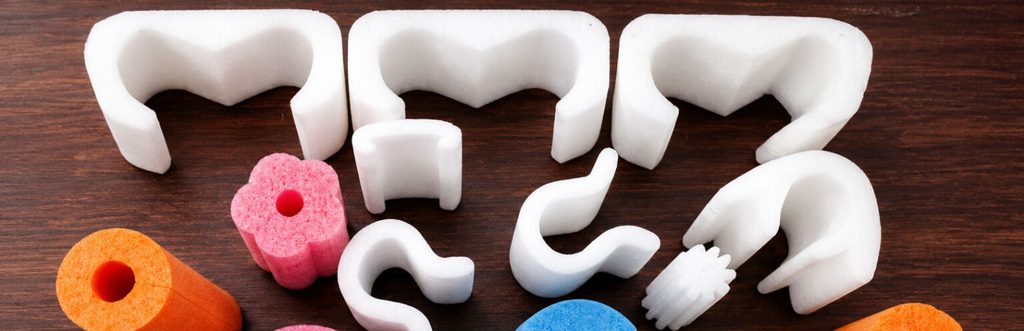
Can closed-cell polyethylene foam be customized? Yes. Polyethylene foam can be extruded into different shapes, sizes, and profiles for specific applications. Depending on manufacturing capabilities and material requirements, density, dimensions, and other characteristics can be adjusted to meet product needs.
UNDERSTANDING FOAM STRUCTURE LEADS TO BETTER MATERIAL SELECTION
The versatility of closed-cell polyethylene foam begins with its internal structure. Its enclosed cells contribute to moisture resistance, cushioning, flexibility, thermal resistance, and buoyancy, while density and cell geometry help determine how those properties perform in specific applications.
Understanding these characteristics helps manufacturers, contractors, and product designers make informed decisions when selecting polyethylene foam products.
At ALCOT PLASTICS, we manufacture extruded closed-cell polyethylene foam products for construction, protective packaging, recreation, and specialized industrial applications. From standard backer rods and foam screening spline to custom-extruded profiles, our team works with customers to explore practical foam solutions for their requirements.
To learn more about our polyethylene foam products and manufacturing capabilities, visit www.alcotplastics.com or contact us at 519-767-2899.